Выбор междукомпенсационный шов из ткании аметаллический компенсационный шовЭто не просто вопрос прочности изделия или устойчивости материала к высоким температурам. Правильный выбор зависит от характера движения системы, рабочего давления, протекающей через нее среды, диаметра воздуховода или трубы, а также от величины нагрузки, передаваемой на подключенное оборудование.
В целом, тканевые компенсаторы очень эффективны в больших системах воздуховодов низкого давления, по которым транспортируется горячий воздух, отработанные газы или дымовые газы, в то время как металлические сильфоны обычно выбираются для трубопроводов высокого давления и технологических систем, где критически важны герметичность и механическая прочность.
В приведенном ниже сравнении объясняется, в каких областях каждая конструкция демонстрирует наилучшие результаты и какие факторы следует учитывать перед выбором компенсационного шва.
Быстрое решение:
Выберитекомпенсационный шов из тканикогда применение связано с большими воздуховодами, низким давлением, значительными боковыми или комбинированными перемещениями, вибрацией, горячими газами или ограниченными допустимыми реактивными нагрузками.
Выберитеметаллический компенсационный шовкогда речь идет о трубопроводах под давлением, паре, жидкостях, высоких механических нагрузках или системах, специально разработанных для использования металлических сильфонов.
| Фактор отбора | Тканевый компенсационный шов | Металлический компенсатор |
|---|---|---|
| Типичное обслуживание | Промышленные воздуховоды и газообразные среды | Трубопроводы, сосуды и инженерные технологические системы |
| Способность выдерживать давление | В основном для применений с низким давлением. | Может быть спроектирован для работы при значительно более высоком давлении. |
| Воздуховоды большого диаметра | Очень подходящий | Возможно, но обычно требует более сложной механической обработки. |
| Осевое движение | Превосходно при правильном проектировании. | Отлично подходит для использования с соответствующей геометрией сильфонов. |
| Боковое движение | Высокая маневренность в компактных конфигурациях | Обычно требуется соответствующая конфигурация сильфонов. |
| Угловое движение | Может обеспечить комбинированное движение | Доступен в различных конфигурациях. |
| Виброизоляция | Очень хорошая гибкость | Зависит от приложения |
| Весенняя сила | В целом низкий | Сильфоны создают измеримые пружинные усилия. |
| Материальная система | Композитные ткани, мембраны и изоляционные материалы | Меха из металлического сплава |
| Общие СМИ | Горячий воздух, выхлопные газы, дымовые газы, технологический газ | Пар, жидкости, газы и технологические жидкости |
| Типичная геометрия | Круглые, прямоугольные и большие формы, изготовленные на заказ. | В основном круглые, но также доступны и прямоугольные варианты. |
Один из самых простых способов начать процесс выбора — определить, устанавливается ли компенсатор в крупном промышленном воздуховоде или в системе трубопроводов под давлением.
Анеметаллический тканевый компенсационный шовЭта система особенно хорошо подходит для больших воздуховодов и газопроводов. Такие системы часто встречаются на электростанциях, цементных заводах, металлургических комбинатах, в промышленных печах, системах пылеудаления, оборудовании для сжигания топлива и выхлопных системах.
В качестве рабочей среды обычно используется газ, а давление часто относительно низкое по сравнению с трубопроводами, работающими под давлением.
В металлических компенсаторах используются тонкие формованные металлические гофры для обеспечения гибкости при сохранении герметичности. Металлические сильфоны широко используются в паровых системах, технологических трубопроводах, нефтехимических, химических и других инженерных системах, где давление является одним из основных проектных требований.
Различия в среде применения объясняют многие различия в производительности между двумя технологиями.
Часто именно давление является первым фактором, отличающим тканевый компенсационный шов от металлического сильфона.
Тканевые соединения в основном предназначены для воздуховодов низкого давления. Их гибкий элемент состоит из ткани с покрытием, армирующих слоев, герметизирующих мембран и изоляции, а не из металлического сильфона, удерживающего давление.
Они обычно встречаются в:
Металлический сильфон может быть сконструирован таким образом, чтобы выдерживать значительно большее внутреннее давление. Его гофрированная металлическая стенка обеспечивает как гибкость, так и удержание давления.
Благодаря этому металлические компенсаторы подходят для таких применений, как:
Правило выбора:Если необходимо сдерживать значительное давление в системе, обычно в первую очередь следует оценить возможность использования металлических сильфонов. Тканевые компенсационные швы не следует рассматривать как прямую замену металлическим сильфонам, рассчитанным на работу под давлением.
Именно движение делает дизайн тканей особенно привлекательным.
Тканевый ремень способен деформироваться на относительно большой площади. Это позволяет ему выдерживать значительные осевые, боковые и угловые смещения без использования многочисленных металлических витков.
Для крупных воздуховодных систем, где тепловое расширение происходит в нескольких направлениях, это может значительно упростить конструкцию компенсационного шва.
Металлические сильфоны также могут обеспечивать подобные движения, но их конструкция должна быть специально разработана с учетом этих возможностей.
For example, larger lateral displacement may require a universal metallic expansion joint with multiple bellows and a center pipe rather than a single bellows element.
Therefore, when large lateral or combined movement is required in a low-pressure duct, afabric expansion jointis often the more practical design.
This is an important engineering difference that is often overlooked during purchasing.
A metallic bellows behaves like a mechanical spring. When it is compressed, extended or laterally displaced, it generates reaction forces that must be considered in the piping design.
These forces may influence:
Fabric expansion joints generally produce much lower spring forces because the flexible textile element is considerably softer than formed metal bellows.
For large duct systems connected to fans, furnaces or lightweight structural components, reducing these reaction loads can be a major advantage.
Fans, blowers, turbines and other rotating equipment can transmit vibration into connected ductwork.
A flexible fabric connector can help isolate some of this vibration because the textile belt does not create the same rigid mechanical path as solid ductwork.
This makes fabric expansion joints especially useful around:
Metal expansion joints can also accommodate vibration, but the movement amplitude, frequency and expected cycle life must be considered carefully in the bellows design.
For high-cycle vibration, neither product should be selected solely from a general product specification. Actual vibration data should be supplied to the manufacturer.
Large rectangular ductwork strongly favors fabric construction in many industrial systems.
Consider an exhaust duct measuring several meters across. Producing a metallic flexible element for such a large cross-section requires substantial metal fabrication and careful control of corner stresses.
A rectangular fabric joint can use a flexible belt installed around the perimeter of the duct, making very large dimensions more practical.
This is whyrectangular fabric expansion jointsare frequently seen in:
For these applications, size alone can significantly influence the final choice.
It is incorrect to assume that metal is always better at high temperature or that fabric automatically has a lower usable process temperature.
The two systems manage temperature differently.
Metallic bellows temperature capability is determined primarily by the selected alloy, design pressure, material strength at temperature and expected fatigue life.
Stainless steels and nickel-based alloys can be selected for elevated-temperature service.
A high-temperature fabric expansion joint may use several thermal layers rather than exposing one flexible membrane directly to the process gas.
A typical construction may include:
The insulation package can reduce the temperature reaching the external sealing materials.
Therefore, ahigh temperature fabric expansion jointshould be selected based on the full temperature gradient through the joint, not simply on the temperature rating of one fabric.
Hot flue gas and exhaust systems are among the most common applications for non-metallic designs.
These installations often combine:
That combination closely matches the strengths of fabric expansion joints.
Typical installations include:
For customized designs, BSTFLEX manufacturesNon Metallic Fabric Expansion Jointsfor industrial ducting, hot-air, flue-gas and exhaust applications.
Corrosion resistance cannot be judged simply by comparing “fabric” with “metal.”
The actual materials must be compared.
A metallic expansion joint may use corrosion-resistant stainless steel or nickel alloy when aggressive media are present.
A fabric expansion joint may use chemical-resistant barrier layers such as PTFE-coated textiles or other compatible membrane systems.
Selection should consider:
Condensation is particularly important in flue-gas systems because chemical attack may become more severe when corrosive gases condense on cooler joint surfaces.
Neither fabric nor metallic bellows should necessarily be exposed directly to severe turbulent flow or abrasive particles without protection.
A fabric joint may use:
A metallic bellows may also require an internal liner to prevent erosion, turbulent excitation or direct impingement on the convolutions.
This means gas velocity, dust loading and flow direction should always be included in the expansion joint specification.
Available space can strongly affect the decision.
A fabric joint can often absorb considerable lateral movement within a relatively short flexible span.
Metallic systems can also accommodate large displacement, but may require more complex arrangements such as universal joints, hinged joints or gimbal configurations depending on movement direction.
However, there are also piping layouts where a compact metallic bellows is the more appropriate design.
Installation space should therefore be considered together with pressure and movement rather than as an isolated factor.
Fabric flexible elements are generally lighter than comparable large metallic assemblies.
This difference becomes increasingly important as duct dimensions increase.
Lower component weight can reduce loads during:
In very large rectangular duct systems, this can be an important practical advantage.
Fabric expansion joints are often designed with replaceable flexible belts.
If the surrounding steel frames remain serviceable, maintenance may involve replacing the flexible element rather than removing the complete assembly.
This can be useful in large duct installations where removing welded steel frames would create significant shutdown work.
Metal expansion joints generally require replacement or repair of the metallic bellows assembly when the bellows itself becomes damaged.
The actual maintenance cost depends on system design, accessibility, joint size and failure mode.
There is no meaningful universal statement such as “metal lasts longer than fabric.”
Service life depends on whether the joint was correctly designed for the application.
A fabric joint can fail prematurely because of:
A metal bellows can fail because of:
Correct engineering matters more than simply choosing one material category over another.
| Application | Usually Preferred | Reason |
|---|---|---|
| Large Low-Pressure Flue Gas Duct | Fabric Expansion Joint | Large size, flexibility and multidirectional movement |
| High-Pressure Steam Pipe | Metal Expansion Joint | Pressure containment requirement |
| Large Rectangular Exhaust Duct | Fabric Expansion Joint | Practical for large custom cross-sections |
| Fan Connection | Fabric Expansion Joint | Low reaction forces and vibration isolation |
| Pressurized Chemical Pipeline | Metal Expansion Joint | Pressure and mechanical requirements |
| Cement Kiln Exhaust Duct | Fabric Expansion Joint | Hot gas, large duct and substantial movement |
| Process Piping | Metal Expansion Joint | Engineered for piping pressure and code requirements |
| Large Boiler Flue Duct | Fabric Expansion Joint | Low-pressure hot-gas application |
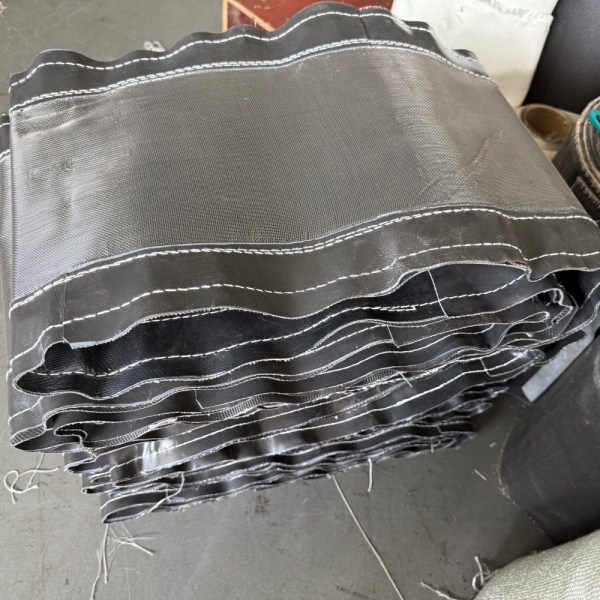
Afabric expansion jointshould be seriously considered when most of the following conditions are present:
This is the typical application envelope for anon metallic expansion joint.
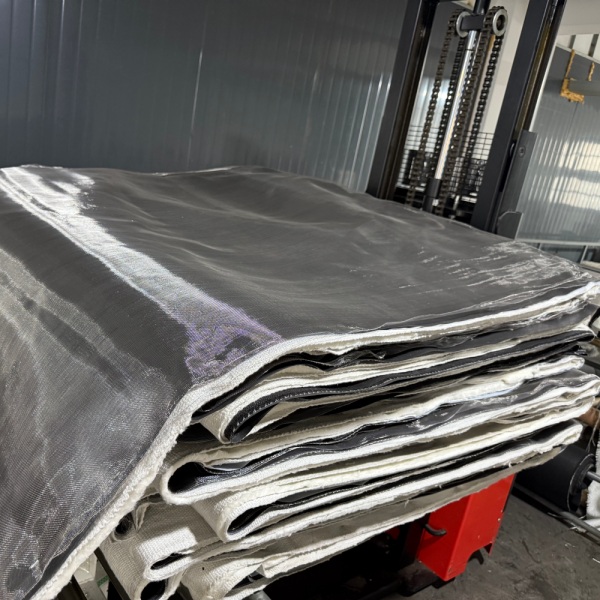
A metallic expansion joint should normally be evaluated first when:
Metallic bellows are engineered pressure-containing components and should be designed around system pressure, temperature, movement, material, fatigue life and piping loads.
Instead of asking, “Which expansion joint is better?” engineers should ask, “Which expansion joint architecture matches this system?”
Use the following sequence.
Is it a large duct or pressurized pipe?
Specify normal pressure, design pressure and whether the system operates under positive or negative pressure.
Provide both continuous operating temperature and maximum excursion temperature.
List axial compression, axial extension, lateral displacement and angular movement individually.
Specify hot air, exhaust gas, flue gas, steam, liquid or process chemical.
Include gas velocity, dust loading, abrasive particles and turbulence.
Determine how much reaction force can safely be transferred to fans, duct supports, equipment nozzles and anchors.
Confirm shape, dimensions, flange arrangement and available face-to-face installation length.
Consider a large rectangular flue-gas duct installed downstream of industrial combustion equipment.
The system has:
In this situation, a fabric expansion joint is often an efficient choice because it can combine large cross-section capability, multidirectional flexibility and low reaction forces.
Now consider a high-pressure steam line operating at elevated temperature.
Although thermal movement still exists, the system requires reliable pressure containment. A metallic bellows engineered for the piping pressure, temperature and movement is generally the appropriate technology.
These examples demonstrate why the operating system must determine the expansion joint type.
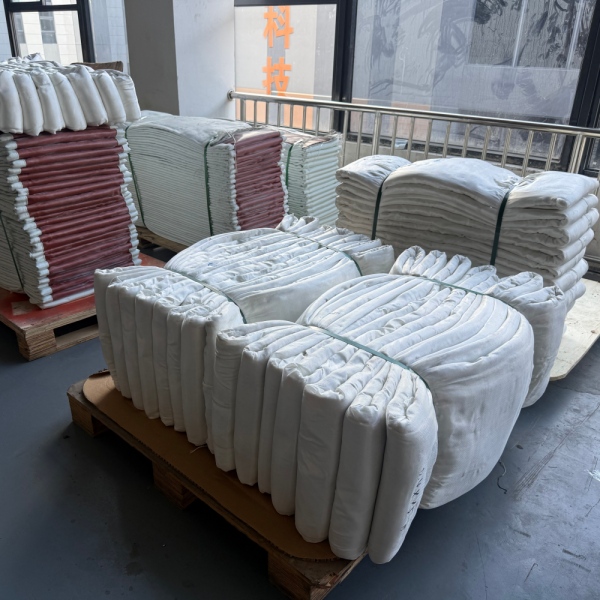
For either metallic or fabric designs, the quality of the engineering recommendation depends heavily on the information supplied.
For a custom fabric joint, BSTFLEX recommends providing:
BSTFLEX manufactures custom non-metallic expansion joints for industrial hot-air, exhaust and flue-gas ducting systems.
Depending on operating conditions, flexible constructions can incorporate technical fabrics, coated fiberglass, PTFE-based sealing layers, high-temperature insulation and protective components.
Round, rectangular and application-specific configurations can be manufactured according to customer drawings and operating data.
See theНеметаллический тканевый компенсационный шов BSTFLEXдля вариантов изготовления на заказ.
Если в вашем оборудовании используется крупный промышленный воздуховод, по которому транспортируется горячий воздух, отработанные газы или дымовые газы, отправьте в BSTFLEX свой чертеж и условия эксплуатации для оценки.
Укажите размеры воздуховода, температуру, давление, рабочую среду, осевое и боковое перемещение, межосевую длину и количество.
Запросите индивидуальный расчет стоимости компенсационного шва для ткани.

 English
 français
 Deutsch
 italiano
 español
 português
 Nederlands
 العربية
 日本語
日本語 한국의
한국의 Türkçe
 Polski
 Tiếng Việt
 slovenský
 Indonesia