заказ (MOQ):
1
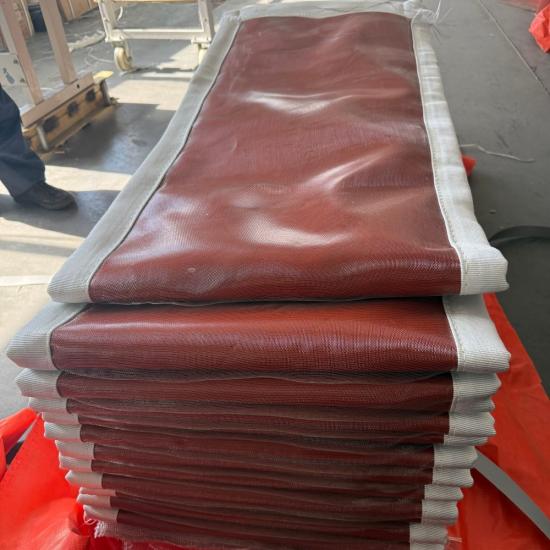
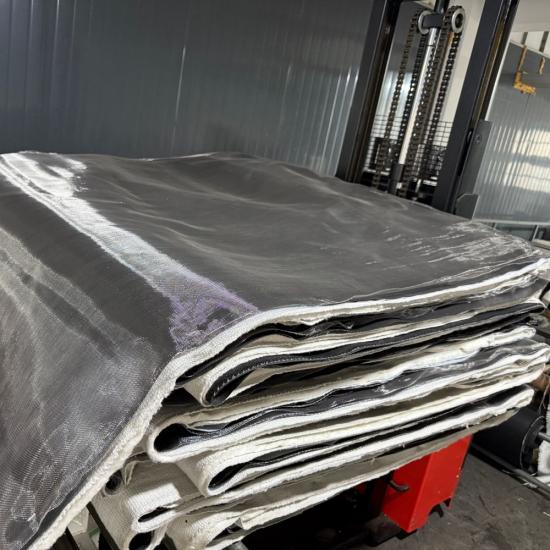
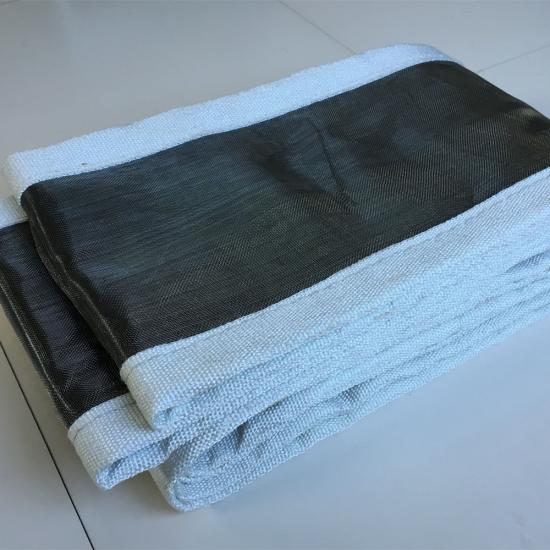
Неметаллический тканевый компенсационный шов BSTFLEXЭто специально разработанный гибкий соединитель, предназначенный для промышленных воздуховодов, систем горячего воздуха, вытяжной вентиляции и дымовых газов, где необходимо компенсировать тепловое расширение, вибрацию, перемещение оборудования или смещение при монтаже без передачи чрезмерных нагрузок на прилегающие воздуховоды и оборудование.
В отличие от жестких металлических компонентов,компенсационный шов из тканиИспользуется один или несколько гибких текстильных, покрытых тканью, уплотнительных и изоляционных слоев, выбранных в зависимости от рабочей температуры, состава газа, условий давления, требований к перемещению и окружающей среды. Гибкий элемент может компенсировать осевое, боковое и угловое смещение, сохраняя при этом контролируемое соединение между двумя участками воздуховода.
Компания BSTFLEX производит круглые, прямоугольные, квадратные и специализированные изделия.неметаллические компенсаторыдля производителей оборудования OEM, подрядчиков по монтажу воздуховодов, систем выработки электроэнергии, цементных заводов, оборудования для обработки стали, промышленных печей, систем вентиляции и других высокотемпературных технологических установок.
| Продукт | Неметаллический тканевый компенсационный шов |
| Альтернативные названия | Компенсатор из ткани, компенсатор из ткани для воздуховодов, композитный компенсатор из ткани, неметаллический компенсатор |
| Строительство | Однослойная или многослойная гибкая конструкция |
| Формы | Круглые, прямоугольные, квадратные и нестандартные геометрические формы |
| Движение | Осевое, боковое, угловое и комбинированное движение |
| Типичные СМИ | Горячий воздух, выхлопные газы, дымовые газы и промышленные технологические газы |
| Материалы | Выбор материала осуществляется с учетом температуры, среды, воздействия химических веществ, абразивного износа и механических свойств. |
| Размер | Изготовление на заказ по чертежам или монтажным размерам. |
| Приложение | Промышленные воздуховоды, вытяжные системы, системы отопления, отопления, вентиляции и кондиционирования воздуха. |
Анеметаллический тканевый компенсационный шовЭто гибкое соединение, устанавливаемое между секциями промышленных воздуховодов или оборудования для компенсации движений, которые в противном случае создавали бы напряжение в системе. Тепловое расширение является одной из наиболее распространенных причин движений, но также может потребоваться контроль вибрации, смещения оборудования, допусков при изготовлении и структурных деформаций.
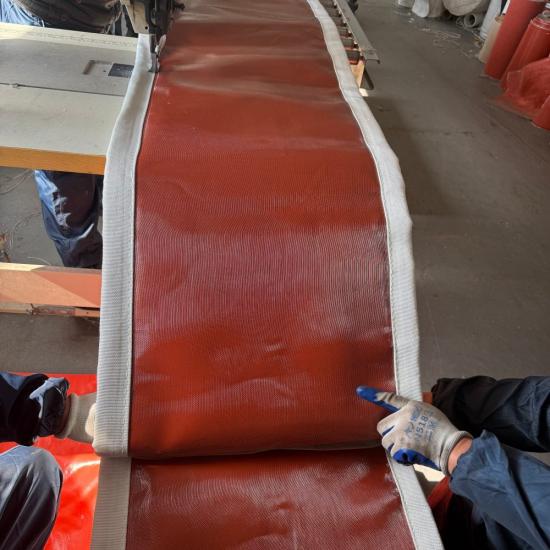
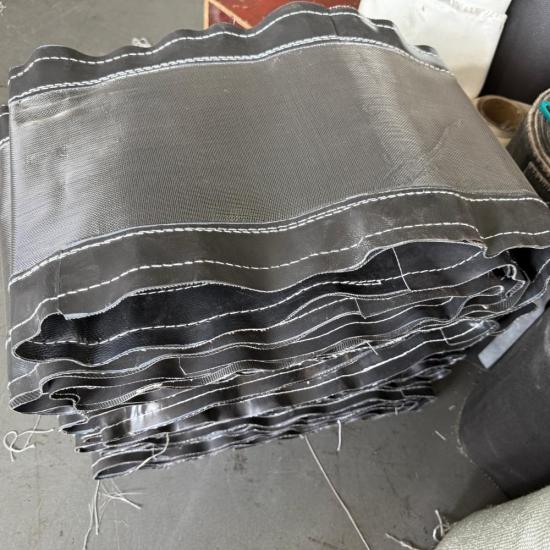
Гибкий корпус обычно изготавливается из слоев инженерного текстиля и ткани с покрытием, а не из формованного металлического сильфона. В зависимости от условий эксплуатации конструкция может включать газонепроницаемую мембрану, армирующую ткань, теплоизоляцию и внутренний защитный слой.
Эта конструкция создаеткомпенсационный шов из тканиОсобенно подходит для воздуховодов большого сечения, горячих газообразных сред и применений, требующих перемещения в нескольких направлениях.
Промышленные воздуховоды расширяются и сжимаются при изменении рабочей температуры. Если это движение полностью подавляется, термическое напряжение может передаваться на стенки воздуховодов, фланцы, вентиляторы, соединения оборудования и несущие конструкции.
Гибкийкомпенсационный шов для тканевого воздуховодаСоздает контролируемую зону перемещения между соседними секциями. По мере расширения, сжатия или смещения воздуховода гибкая секция изменяет свою геометрию, а не передает все перемещение жестким компонентам.
В зависимости от геометрии соединения и конструкции системы, компенсационный шов может вмещать:
Не существует единой конструкции ткани, подходящей для всех промышленных компенсационных швов. Надежная конструкция начинается с реальных условий эксплуатации.
Многоуровневая система может содержать несколько функциональных уровней, каждый из которых выполняет свою задачу:
Газонепроницаемый слой помогает удерживать технологическую среду и выбирается в зависимости от температуры, состава газа, влажности, воздействия химических веществ и условий давления. В зависимости от области применения могут быть использованы материалы на основе стекловолокна с покрытием или фторполимеров.
Армирующий слой обеспечивает стабильность размеров и механическую поддержку гибкого элемента. В зависимости от требуемых механических и термических свойств можно выбрать тканое стекловолокно и другие технические текстильные материалы.
В высокотемпературных системах может потребоваться изоляционный слой для снижения температуры, достигающей наружных уплотнительных материалов. Толщина и материал изоляции должны рассчитываться в соответствии с температурой газа, пределами внешней температуры и геометрией соединения.
В тех случаях, когда компенсатор подвергается воздействию высокой скорости газа, твердых частиц или абразивных сред, может потребоваться внутренняя защитная система или гидроизоляционный слой для уменьшения прямого воздействия на гибкий элемент.
Выбор материалов — одна из важнейших составляющих процесса.неметаллическая конструкция компенсационного шваBSTFLEX работает с широким спектром устройств.высокотемпературные тканиа также технический текстиль с покрытием, что позволяет адаптировать гибкую конструкцию к различным промышленным условиям.
| Тип материала | Типичная функция | Критерии отбора |
|---|---|---|
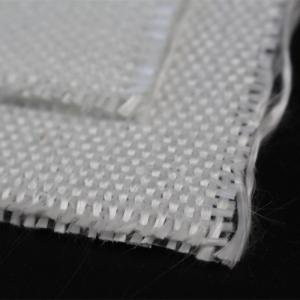
| Стекловолоконная ткань | Reinforcement and thermal-resistant textile layer | Temperature, weight, weave and mechanical strength |
| Silicone Coated Fiberglass | Flexible outer or sealing layer | Temperature, weather resistance, flexibility and environment |
| PTFE Coated Fabric | Gas sealing and chemical-resistant layer | Chemical compatibility, temperature and process media |
| Silica Fabric | High-temperature thermal protection layer | Temperature exposure and insulation requirement |
| Insulation Materials | Reduction of temperature through the joint construction | Operating temperature and required external surface temperature |
| Metal Mesh or Internal Liner | Mechanical or flow protection where required | Gas velocity, abrasion, particles and installation geometry |
For particularly demanding thermal environments, BSTFLEX can evaluate high-silica textile solutions such as96% high temperature silica fabricas part of the overall thermal protection system where technically appropriate.
The final material combination should always be determined from actual application data rather than temperature alone.
Ahigh temperature fabric expansion jointis not defined by one universal maximum temperature. The permissible operating temperature depends on the complete joint construction, including the hot-face protection, insulation package, reinforcement fabric, gas seal membrane, external cover and the temperature distribution through those layers.
For this reason, BSTFLEX evaluates both process temperature and the temperature expected at individual layers of the expansion joint. This approach allows the materials to be selected for their actual operating environment rather than relying on a single generic temperature rating.
When requesting a high-temperature joint, provide the normal operating temperature, maximum or upset temperature, exposure duration and process medium wherever possible.
BSTFLEX manufactures expansion joints according to the shape and dimensions of the customer's ducting system.
Arectangular fabric expansion jointis commonly used on large industrial ductwork, boiler systems, air-handling equipment, furnace connections and flue-gas ducts. Corner geometry, movement distribution and attachment design require particular attention because stress is not distributed in the same way as on a circular joint.
Round and circular fabric expansion joints are suitable for cylindrical duct systems, fan connections, exhaust lines and process-air installations. Diameter, face-to-face length and movement requirements can be manufactured according to the installation.
Non-standard shapes, transitions and asymmetric configurations can be evaluated when standard round or rectangular joints cannot match existing equipment.
Different attachment arrangements can be supplied depending on the duct design and replacement requirements.
Belt-type fabric expansion jointsuse a flexible belt attached to mating metalwork and are suitable for many large industrial duct applications.
Flanged fabric expansion jointscan be manufactured as complete assemblies where the flexible element, insulation components and supporting metalwork are supplied as an integrated unit.
For replacement projects, BSTFLEX can manufacture according to customer drawings, dimensional records or available sample information.
BSTFLEXnon metallic fabric expansion jointscan be engineered for a broad range of hot-air and process-gas ducting systems.
Fabric joints can be used in boiler ducting, flue-gas handling systems, fan connections and other large gas-transport ducts where thermal movement and vibration need to be isolated.
Cement production involves large ductwork exposed to heat, dust and continuous equipment movement. Expansion joints may be used around kiln-related ducting, process-air systems, fans and gas-handling equipment.
Furnace exhaust, hot-air ducts and process ventilation systems may require flexible connections capable of accommodating thermal growth while operating around demanding high-temperature equipment.
Where process gases contain corrosive constituents, joint materials should be selected according to chemical compatibility as well as temperature.
Fabric joints can compensate for expansion between heated equipment and downstream ductwork while helping isolate movement and vibration.
Flexible expansion joints can reduce the transmission of mechanical vibration between fans, blowers and rigid ducting.
High-temperature exhaust and hot-gas systems often require a flexible transition capable of accommodating repeated thermal cycles and installation movement.
| Design Factor | Fabric Expansion Joint | Metal Expansion Joint |
|---|---|---|
| Flexible Element | Technical fabric or composite textile construction | Formed metallic bellows |
| Typical System | Industrial ducting and gaseous-media systems | Pipe and process systems including higher-pressure service |
| Large Cross Sections | Well suited to large duct dimensions | Possible but design becomes more complex |
| Multidirectional Movement | Can accommodate axial, lateral and angular movement | Depends strongly on bellows configuration |
| Vibration Isolation | Good flexibility for fan and duct connections | Application dependent |
| Material Selection | Composite layers can be selected for thermal and chemical conditions | Determined mainly by metal alloy and bellows design |
The correct choice depends on pressure, temperature, process medium, duct geometry, required movement and applicable engineering standards. Fabric and metallic expansion joints should therefore not be treated as universally interchangeable products.
Selecting an expansion joint only by duct size or maximum temperature is not sufficient. Several operating parameters interact with each other and influence the appropriate construction.
The following information should be evaluated:
Providing this information allows the flexible element and supporting components to be selected around the real service conditions.
For faster engineering evaluation and quotation, send as much of the following information as available:
| Duct Size | Diameter or width × height |
| Joint Shape | Round, rectangular, square or custom |
| Installation Length | Face-to-face dimension |
| Operating Temperature | Normal continuous temperature |
| Maximum Temperature | Maximum or upset temperature and duration |
| Pressure | Normal and design pressure |
| Process Medium | Air, flue gas, exhaust gas or other process gas |
| Axial Movement | Compression and extension |
| Lateral Movement | Required offset movement |
| Angular Movement | Required angular displacement if applicable |
| Environment | Indoor, outdoor, chemical, dusty, wet or abrasive |
| Drawing | PDF, CAD drawing, dimensional sketch or existing joint details |
| Quantity | Prototype, replacement quantity or production requirement |
Industrial expansion joints are frequently project-specific components rather than standard catalogue parts. BSTFLEX supports customized manufacturing according to drawings, dimensional requirements and operating conditions.
Custom options may include:
Because BSTFLEX also works directly with thermal protection textiles and coated high-temperature fabrics, material construction can be evaluated as part of the expansion joint design instead of treating the flexible element as a generic component.
BSTFLEX focuses on engineered thermal protection and technical textile products for industrial applications. Our manufacturing capabilities cover high-temperature woven fabrics, coated fabrics, insulation materials and fabricated thermal components, providing a practical material base for customfabric expansion jointprojects.
A non metallic expansion joint is a flexible connection used primarily in ducting and gaseous-media systems to accommodate thermal expansion, vibration, misalignment and multidirectional movement. Its flexible element is normally manufactured from technical fabrics, coated textiles, insulation and other non-metallic materials selected according to the operating environment.
A fabric expansion joint uses a flexible textile or composite membrane, while a metallic expansion joint normally uses formed metal bellows. Fabric joints are widely used on large industrial ducts and gas-handling systems, while metallic bellows are common in piping and applications where system pressure or process requirements favor metallic construction.
Yes. Properly designed fabric expansion joints can accommodate axial, lateral and angular movement as well as combinations of these movements. The required movements must be provided during design so the joint geometry can be selected correctly.
There is no single temperature rating for every fabric expansion joint. Temperature capability depends on the flexible membrane, insulation package, hot-face protection, sealing material and overall joint construction. BSTFLEX selects the material system according to the normal operating temperature, maximum temperature and exposure conditions.
Depending on the application, materials may include fiberglass fabric, silicone-coated fiberglass, PTFE-coated fabric, silica fabric, insulation materials and metallic protective components. Each layer is selected according to its specific function.
Yes. Fabric expansion joints are widely applicable to industrial flue-gas and hot-gas ducting when the construction is engineered for the process temperature, chemical composition, moisture, pressure, gas velocity and movement requirements.
Yes. BSTFLEX manufactures rectangular, round, square and other custom configurations according to duct dimensions and installation requirements.
In many cases, yes. Dimensional measurements, photographs, operating conditions and information from the existing expansion joint can be used for an initial evaluation. A complete drawing or physical sample provides additional information when available.
The most useful information includes duct dimensions, joint shape, face-to-face length, operating and maximum temperature, pressure, process medium, axial movement, lateral movement, angular movement, gas velocity, chemical exposure, flange arrangement and required quantity. Drawings are strongly recommended where available.
Если вы ищете замену компенсатору или разрабатываете новую систему промышленных воздуховодов, отправьте в BSTFLEX свой чертеж и условия эксплуатации. Наша команда сможет оценить необходимую форму, размеры, гибкие материалы, конструкцию изоляции и требования к перемещению для вашего применения.
Для составления коммерческого предложения, пожалуйста, предоставьте следующую информацию:Размеры воздуховода, температура, давление, технологическая среда, требования к перемещению, длина монтажа, количество и имеющиеся чертежи.
Запросите расчет стоимости вашего проекта по устройству компенсационных швов из ткани.
Предыдущий:
тепловой экран tig fingerСледующая:
Теплоизоляционное покрытие для цилиндра литьевой машиныесли у вас есть вопросы или предложения, пожалуйста, оставьте нам сообщение, мы ответим вам как можно скорее!

 English
 français
 Deutsch
 italiano
 español
 português
 Nederlands
 العربية
 日本語
日本語 한국의
한국의 Türkçe
 Polski
 Tiếng Việt
 slovenský
 Indonesia